Remember when SEO was simple? You stuffed some keywords into your page, bought a few shady backlinks from a guy named Dave in a forum, and boom — page one, baby. Your plumbing website was ranking above Wikipedia. Life was beautiful.
Those days are dead. We killed them. And then AI came along and danced on the grave.
The Old Days: A Love Letter to Keyword Stuffing
Let us pour one out for the golden era. Back in like 2009, you could literally write “best pizza NYC best pizza NYC best pizza NYC” in white text on a white background and Google would be like “ah yes, this is clearly the most authoritative source on pizza in New York City.”
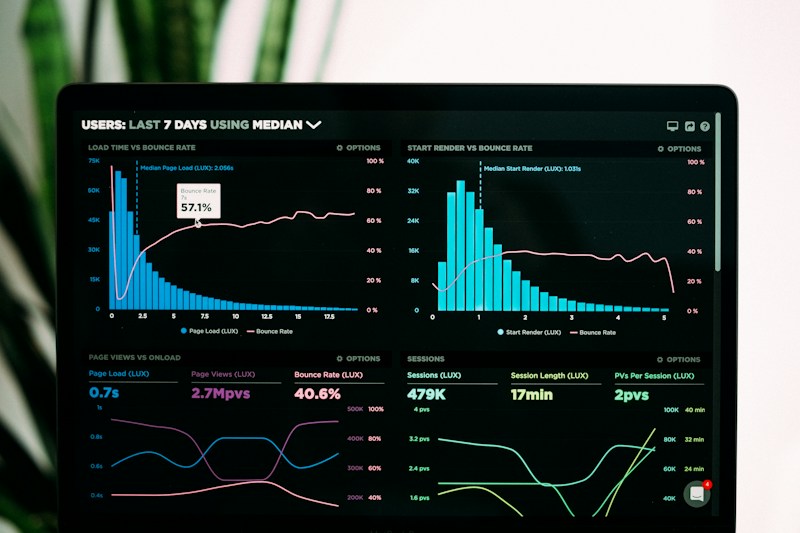
The entire SEO industry was basically a contest to see who could trick a billion-dollar search engine using techniques a clever 14-year-old would come up with. And it worked! For years!
Then Google started getting smart. Panda. Penguin. Hummingbird. They named their algorithm updates after animals, which was adorable and also terrifying if your entire business model was built on spam.
Here’s a brief history of Google making everyone’s life progressively harder:
| Year | Update | What It Killed | Tears Shed |
|---|---|---|---|
| 2011 | Panda | Content farms, thin pages | Many |
| 2012 | Penguin | Spammy backlinks, link schemes | Oceans |
| 2013 | Hummingbird | Exact-match keyword gaming | Rivers |
| 2015 | RankBrain | Ignoring user intent | Lakes |
| 2019 | BERT | Keyword-stuffed nonsense | Puddles |
| 2022 | Helpful Content | AI-generated slop (v1) | Reservoirs |
| 2024 | AI Overviews | Your click-through rate | All of them |
Enter AI: Your Content Is Now Just Training Data
So here we are in 2026 and the game has changed completely. Google has AI Overviews that summarize your carefully crafted 3,000-word blog post into a neat little paragraph at the top of the search results. The user reads it, gets their answer, and never clicks on your site.
You spent six hours writing that article. Google spent six milliseconds eating it alive.
The numbers are genuinely brutal. According to recent studies:
| Metric | Before AI Overviews | After AI Overviews | Change |
|---|---|---|---|
| Average CTR | 8.7% | 5.7% | -34.5% |
| Organic traffic | Baseline | -24% average | Down |
| SERP real estate (mobile) | ~40% for organic | ~24% for organic | -40% |
| Zero-click searches | 65% | 74% | +14% |
And the beautiful irony? Google needs your content to exist so it can summarize it. But it gives you zero traffic for it. It is the most toxic relationship since… actually, no, it is just regular Google behavior. We should have seen this coming.
Fun fact: AI Overviews appeared for 6.49% of keywords in January 2025, rose to nearly 25% by July, and settled around 15.69% by November. Google is literally A/B testing how much of your traffic they can steal before you notice.
ChatGPT and Friends: The New Search Engines Nobody Asked For
Meanwhile, half your potential audience is not even using Google anymore. They are asking ChatGPT. Or Claude. Or Perplexity. Or whatever AI assistant is trendy this week.
“Hey Claude, what is the best way to fix a leaky faucet?”
And Claude is like, here is a detailed step-by-step guide, synthesized from 47 plumbing websites, none of which will receive a single pageview for their contribution. You are welcome.

As a content creator, you are now essentially writing training data for free. You are an unpaid intern for a language model. Congratulations on your career pivot.
Here’s who is eating your lunch, ranked by monthly visits:
- Google — 83.5 billion visits/month (still the big boss)
- YouTube — 48.6 billion visits/month (yes, it’s a search engine too)
- Facebook — 9 billion visits/month (boomers searching for minion memes)
- ChatGPT — 5.6 billion visits/month (and climbing like a rocket)
- Perplexity — 450 million visits/month (the new kid everyone’s watching)
So Is SEO Actually Dead?
No. And I will fight anyone who says it is.
SEO is not dead. It is just having an identity crisis. Like a 40-year-old who just discovered TikTok and is wondering if they should start doing dance trends. The answer is no, Kevin. But you should probably adapt.
Here is the thing: people still search. People still click. People still buy things. The mechanics have changed, but the fundamentals have not.
You still need to:
- Actually answer the question — Not in paragraph 47 after your life story about how your grandmother taught you to make pasta. Nobody cares, Jessica.
- Have real expertise — Google’s E-E-A-T guidelines (Experience, Expertise, Authoritativeness, Trustworthiness) are basically them saying “stop letting your marketing intern write medical advice.”
- Build a real brand — Because when AI summarizes everything, the only thing that makes someone click through is “I want to hear what these specific people have to say.”
- Structure your content for robots — Schema markup, clean HTML, proper headings. The robots are reading your site, and they appreciate good formatting just like your English teacher did.
The AI SEO Playbook (That Will Probably Be Outdated by Next Tuesday)
Alright, here is what actually works right now:
1. Be the Source, Not the Summarizer
If your content is just a rewrite of what everyone else has already said, AI will happily summarize the original and ignore you entirely. You need original data, original research, original opinions. Be the primary source that the AI has to cite.
2. Optimize for AI Citations
Perplexity and similar tools actually link to their sources. So does Google’s AI Overview, sometimes, when it is feeling generous. Structure your content so it is easy for AI to quote and attribute. Clear statements. Definitive answers. Named sources.
3. Embrace Structured Data Like Your Life Depends on It
JSON-LD, schema markup, OpenGraph tags — this is not optional anymore. This is how you tell the machines “hey, I am a real website with real content, please acknowledge my existence.”
Think of it like putting a name tag on at a party full of robots. Without it, you are just another face in the crowd.
Here’s what proper Article schema looks like — yes, you need all of this:
{
  "@context": "https://schema.org",
  "@type": "Article",
  "headline": "Your Brilliant Article Title",
  "description": "A compelling meta description under 160 chars",
  "datePublished": "2026-02-27T00:00:00Z",
  "dateModified": "2026-02-27T12:00:00Z",
  "author": {
    "@type": "Person",
    "name": "Actual Human Writer",
    "url": "https://yoursite.com/about"
  },
  "publisher": {
    "@type": "Organization",
    "name": "Your Brand",
    "logo": {
      "@type": "ImageObject",
      "url": "https://yoursite.com/logo.png"
    }
  },
  "image": {
    "@type": "ImageObject",
    "url": "https://yoursite.com/hero.webp",
    "width": 1200,
    "height": 630
  },
  "wordCount": 2500,
  "mainEntityOfPage": {
    "@type": "WebPage",
    "@id": "https://yoursite.com/your-article"
  }
}
And your robots.txt should look something like this — notice we’re inviting crawlers, not blocking them:
User-agent: *
Allow: /news/
Allow: /blog/
Allow: /images/
Disallow: /admin/
Disallow: /api/

Sitemap: https://yoursite.com/sitemap.xml
4. Create Content AI Cannot Replicate
You know what AI is terrible at? Having opinions. Being funny. Telling stories about that one time you accidentally deployed to production on a Friday at 4:57 PM and brought down the entire site.
Original human experience is your competitive advantage. Use it.
Here’s a handy checklist for “Will AI steal this content?”:
- [ ] Is it a generic listicle? AI will eat it alive.
- [ ] Does it contain original data or research? You might survive.
- [ ] Is it a personal story or hot take? AI can’t replicate this.
- [ ] Does it have custom visuals or diagrams? You’re probably safe.
- [ ] Is it “In today’s rapidly evolving digital landscape…”? You ARE the AI content.
5. Build Community, Not Just Traffic
Email lists. RSS feeds (yes, really, they are making a comeback). Discord servers. Podcasts. Direct relationships with your audience mean you do not need Google’s permission to reach people.
The best SEO strategy in 2026 might actually be not depending on SEO at all. Plot twist.
Your Technical SEO Checklist for 2026
If you’re going to do SEO in the age of AI, here’s the actual technical stuff you need to nail. No fluff, just the essentials:
- Structured data everywhere — Article, BreadcrumbList, FAQ, HowTo schemas
- Core Web Vitals — LCP under 2.5s, INP under 200ms, CLS under 0.1
- Responsive images — Use
srcsetandsizes, serve WebP/AVIF, includewidthandheight - Semantic HTML — Proper heading hierarchy (h1 → h2 → h3),
<article>,<nav>,<main> - Meta tags done right — Canonical URLs, Open Graph, Twitter Cards
- XML Sitemap — Updated, submitted to Google Search Console
- RSS Feed — Yes, seriously, RSS is back
- Internal linking — Help both humans and robots navigate your content
- Page speed — Compress, cache, lazy-load, defer non-critical JS
- Mobile-first — If it doesn’t work on a phone, it doesn’t work
Here’s the meta tags you should have on every single page:
<!-- The basics -->
<meta name="robots" content="index, follow" />
<link rel="canonical" href="https://yoursite.com/your-page" />

<!-- Open Graph (Facebook, LinkedIn, etc.) -->
<meta property="og:type" content="article" />
<meta property="og:title" content="Your Title" />
<meta property="og:description" content="Your description" />
<meta property="og:image" content="https://yoursite.com/og-image.webp" />
<meta property="og:url" content="https://yoursite.com/your-page" />

<!-- Twitter Card -->
<meta name="twitter:card" content="summary_large_image" />
<meta name="twitter:title" content="Your Title" />
<meta name="twitter:description" content="Your description" />
<meta name="twitter:image" content="https://yoursite.com/twitter-image.webp" />

<!-- RSS -->
<link rel="alternate" type="application/rss+xml"
      title="Your Site" href="https://yoursite.com/feed.xml" />
The Elephant in the Room: AI-Generated Content
Let us address the fact that approximately 90% of the internet is now written by AI. Every company and their dog has a “content strategy” that is just “have GPT write 50 blog posts a month and see what sticks.”
The result? An ocean of mediocre, technically-correct-but-soulless content that all sounds exactly the same. You can spot AI content from a mile away — it is the one that starts every paragraph with “In today’s rapidly evolving digital landscape” and ends with “In conclusion.”

Google knows. They have always known. And they are getting better at deprioritizing it.
So paradoxically, the best SEO strategy in the age of AI might be… not using AI to write your content. Or at least not letting it write all of it. Let AI help with research, outlines, editing. But the actual voice? That needs to be you.
Because at the end of the day, people do not want to read content written by a machine summarized by another machine. They want to read something written by a human who clearly has opinions and possibly had too much coffee.
The Rise of LLM Optimization (LLO)
Here’s a new acronym for your collection: LLO — Large Language Model Optimization. It’s like SEO, but for getting your brand recommended by AI chatbots.
Think about it: when someone asks ChatGPT “what’s the best project management tool?”, you want your product in that answer. This is a whole new battlefield, and the rules are still being written.
Here’s what we know so far about how LLMs decide what to recommend:
| Factor | Weight | How to Optimize |
|---|---|---|
| Brand mentions across the web | High | PR, guest posts, community presence |
| Wikipedia / Wikidata presence | High | Create or update your entity’s wiki page |
| Structured data on your site | Medium | JSON-LD, schema.org markup |
| Reviews and ratings | Medium | Encourage authentic reviews on major platforms |
| Reddit and forum discussions | Medium | Engage genuinely (not spam!) in relevant communities |
| Recency of content | Medium | Keep your key pages updated |
| Domain authority | Lower than in SEO | Still matters, but less than brand recognition |
The Bottom Line
SEO in 2026 is weird. It is confusing. It changes every other week. The old tricks do not work, the new tricks might stop working tomorrow, and half your traffic is going to AI chatbots who will never click an ad.
But you know what? The people who figure it out — who create genuinely useful, genuinely interesting, genuinely human content — are going to do incredibly well. Because when everything is AI slop, the real stuff stands out like a lighthouse in a sea of beige.
Now if you will excuse me, I need to go check if Google has summarized this article yet and stolen my best jokes.
This article was written by a human. Probably. You will never know for sure, and honestly, does it even matter anymore? Yes. Yes it does. That is the whole point of the article. Please read it again.